
When an SD card is not showing full capacity, it is usually because of logical errors, compatibility issues, or technical errors like bad sectors. Logical errors can be taken care of by doing some quick fixes. If you want to know why your SD card might be showing the wrong size on any other device other than a computer, you might want to first check the compatibility. For example, a few cameras only support 32 GB memory cards. Start with verifying the device.
If you have bought the SD card new and it does not have the same storage space as claimed, it might also be that the product is not genuine. Here are a few other important reasons why an SD card might not be showing full capacity.
Why is my SD Card not Showing Full Capacity?
“I have a 128GB SD card which is not showing full capacity in my Windows 10 computer, I am not able to format it to the correct size with Windows format tool. Why does my 128GB microSD card formatting to lower capacity and only showing 32GB?”
Usually, it happens because of three main reasons:
- Virus infection
- Cheap or faulty SD card
- SD card is not compatible with the card reader
Typically, this error is prevalent in large-capacity flash drives such as SDHC or SDXC cards, where the capacity of SD cards can even reach over 250 GB. So, if either the card reader or the host device does not support such high capacities, the host device will create a smaller partition.
Simply, a camera or a phone might support a storage drive of only up to 32 GB. If you insert such a high-capacity SD card which is 128 GB, onto such a host device, by default, the host device (camera or Phone) will create a partition of 32 GB, and the remaining space will be marked as unallocated.
In such cases, your SD card or any kind of flash drive will reduce the storage space.
The other scenarios because of which memory card capacity is reduced might be Bad Sectors. Bad Sectors are damaged storage sectors that don’t respond to read or write commands. It also leads to the memory card not storing new data issue.
Or even a typical virus attack might alter the Master boot record of the flash drive (MBR is like an index of the storage drive where all the details of the drive are maintained) and result in memory card capacity being reduced.
Note: Check out this article if you are encountering an issue saying the SD card says empty even though it is not.
Best Time to Restore the SD Card to its Full Capacity?
When it comes to recovering data from SD card, you can directly copy and save files to other secure storage devices. But what if the card is inaccessible? Well, in such instances, the perfect choice would be to let the best SD card recovery software for help.
Remo Recover can simply help find and restore files from SD cards to other devices with simple clicks on Windows 11/10/8/7 PC. This tool can restore lost or deleted files from any SD card like a mini SD card, micro SD card, SDHC, SDXC, etc. Additionally, it can restore files from the formatted drive with NTFS, NTFS5, ExFAT, and FAT32. The Remo supports all sorts of data, and even it recovers videos from a formatted SD card.
How to Restore My SD Card to Full Capacity?
Once performing the corrupted memory card recovery on the PC, you can now format the SD card to reclaim its full capacity for saving data again. So here you’ll find the two most recommended free methods to format and restore SD cards to full capacity.
Expand the Unallocated space
Use the unused space on your SD card that hasn’t been assigned to a volume. Use these steps to expand the SD card size that shows less capacity.
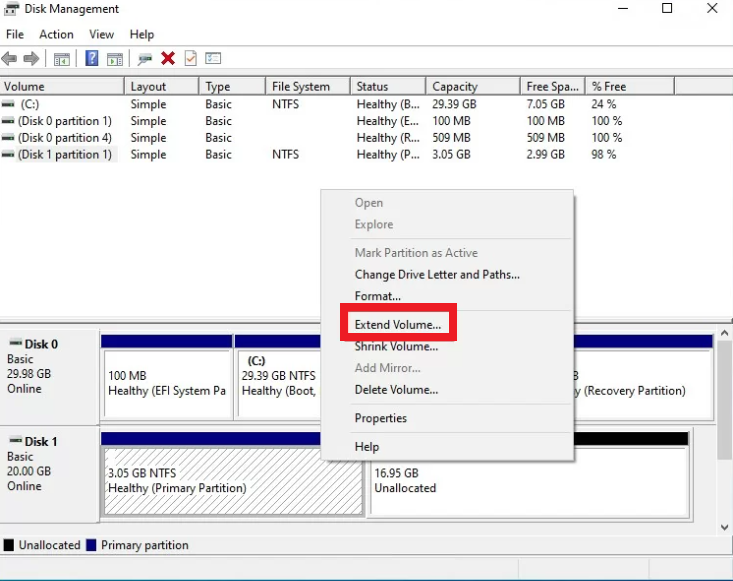
- Open Disk management
- Right-click on the functional volume on your SD card and choose Extend Volume.
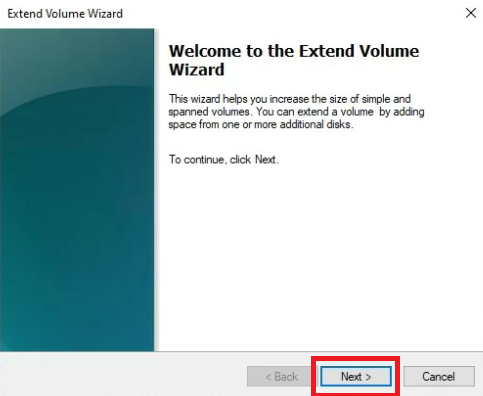
- Click on Next.
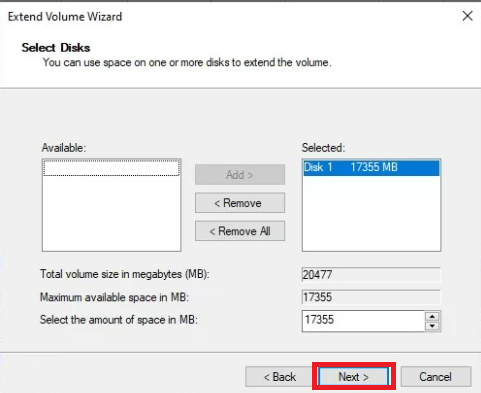
- Select the size to extend the volume in MB (Default selects all available space) and click Next.
- Click on Finish.
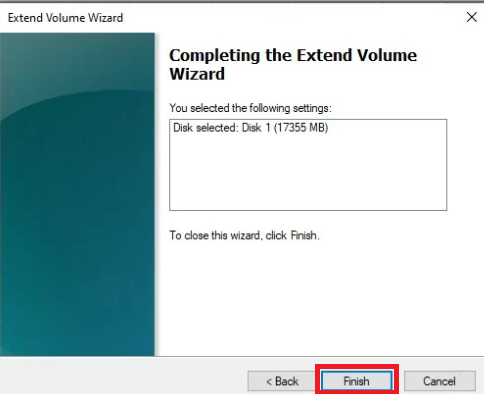
Now check if the SD is choosing its full storage capacity.
Use DiskPart Command to Restore SD Card to Full Capacity
Let’s see how to use the DiskPart command to clear and restore capacity on the SD card now:
- First of all, get your SD card attached to the PC
- Right-click Start and select Command Prompt (Admin)
- Sign in as administrator and type: diskpart to bring up DiskPart
- Type: list disk and hit Enter
- Then type: select disk 1 (replace 1 with the disk number of your SD card and hit Enter)
- Type: clean and hit Enter
- Then type create partition primary to create a partition on the cleaned SD card and hit ENTER
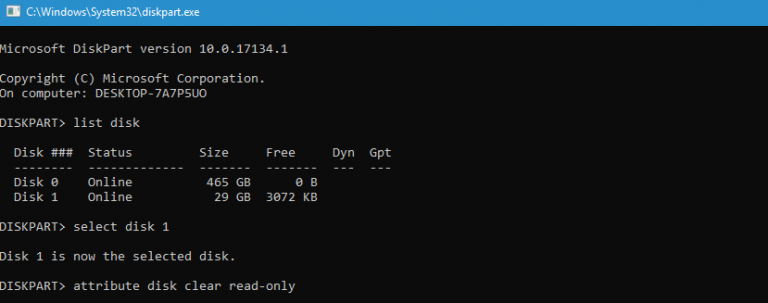
- Type format fs=ntfs or format fs=exfat and hit ENTER to format the drive with NTFS or exFAT
- Type assign letter=drive letter (Assign a letter to the drive)
- Type: exit and hit Enter
Here, one thing to be noticed is that the DiskPart CMD command will help you clean the whole SD card, but you do need to recreate a new partition to make the SD card available for saving files again. So, you can use the Disk Management tool in Windows 10 or other Windows PCs to create a new partition.
Be careful while recreating a new partition in an SD card. Even a small ignorance can lead to a corruption of the partition map of the SD card, which in turn can result in severe data loss.
To fully format and reclaim the full capacity of the SD card, follow the steps:
- Right-click This PC/My Computer > Manage
- Select Disk Management under Device Manager, find and right-click on SD card, and select Format Volume
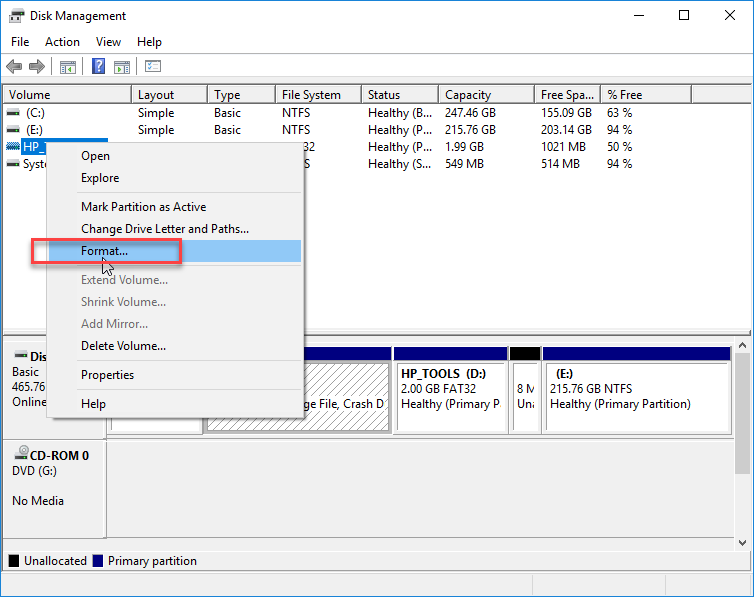
- Rename and reset the file system of the SD card to NTFS or FAT32 as you need, follow the on-screen guidelines to complete the format process
Restore SD Card to Full Capacity on Mac:
Here are a few steps to reset SD to full capacity on Mac
- Open the Disk Utility app
- Select your SD card and click on Erase option
- Choose the file system and click on Erase
You may selectively follow any one method to get your SD card back to work normally again. However, remember to first recover the data from the memory card. As even though you’ll regain the full capacity of your SD card and will be able to use it for storing and saving files again then, formatting will cause data loss if you haven’t backed up your files.
“If you are a victim of SD card format and looking to recover formatted SD card data, then it is recommended to use Remo Recover.”
Conclusion
This article addresses the issue of high-capacity cards like SDHC and SDXC showing less capacity than their actual storage due to file system corruption, an incompatible card reader, and viruses and malware. By running diskpart command or formatting the card, you can completely fix this issue, but there is a risk of losing your valuable files in the process.
Before attempting any methods to fix the issue, make sure to recover all the files on the SD card using Remo Recover.
Frequently Asked Questions
If the SD card appears to be empty but has no space for new files then the reasons could be:
1. Hidden files.
2. Data corruption.
3. File system errors.
try recovering the data using Remo Recover before considering formatting as a last option
The indications of a corrupt SD card are:
1. Inability to access files on the SD card.
2. SD card is slower than usual.
3. Unrecognized or missing files.
4. Error messages.

5 thoughts on “SD card Not Showing Full Size – Restore SD Card to Full Capacity”
Comments are closed.

Thank you so much, sorted me out
thank you, it worked
Thank you for this!
Wow, Good job Brother. Thank you. My sd card is now healthy again.
Hey Sibiya.! Thank you for leaving your kind words.