How to Backup Outlook 365 Data?

11 minutes read

Protecting your Outlook 365 data may seem hard, but losing all your Outlook 365 data is harder. In this article, we will teach you how to back up Outlook 365 safely.

Gravatar Tony Landry
Written By
Updated On

Outlook 365 brings the power of Microsoft Outlook to the cloud, letting users access their emails, contacts, and calendars from any system or device. However, it lacks a reliable backup solution to restore data in case of a system upgrade, moving to a newer version of Outlook, or any logical reason.

A sudden Outlook crash or simple deletion can make your Outlook 365 mailbox inaccessible. Read this informative write-up and learn how to backup Outlook 365 data safely.

Do I need to backup Outlook 365?

Microsoft keeps data safe with 30-day recovery. Backup is necessary if you are moving Microsoft 365 or needing long-term local archives. However, it is always safer to take precautions and maintain an offline backup.

Microsoft emphasizes on a Shared responsibility model. lt that data security is a shared responsibility. While it ensures that it’s servers are secure, users are responsible for all components that they have control over.

“For all cloud deployment types, you own your data and identities. You’re responsible for protecting the security of your data and identities, on-premises resources, and the cloud components you control.” Microsoft Documentation

Today, we will use the Outlook Import/Export Wizard to back up Outlook 365. If you are looking for a more user-friendly method, we will show you how to make use of a third-party backup tool to do the same.

Method 1: Backup Outlook 365 Data Using Outlook Export feature

Outlook 365 has a built-in feature that allows Outlook 365 to export PST files, emails, and other Outlook data. However, we encourage you to make this a habit regularly or back up Outlook automatically.

We shall divide this segment into two parts –

  • Create Outlook 365 Backup Using the Import/Export feature
  • Restore Outlook 365 Backup Import/Export feature

Step 1: Export Outlook 365 Data Using Import/Export Wizard

1. Open Outlook Import/export Wizard.

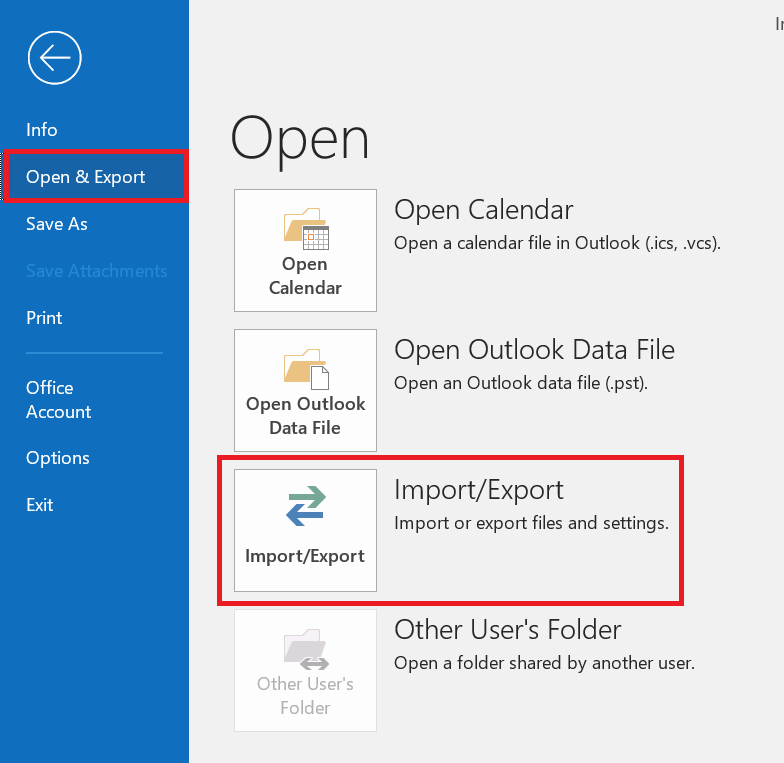
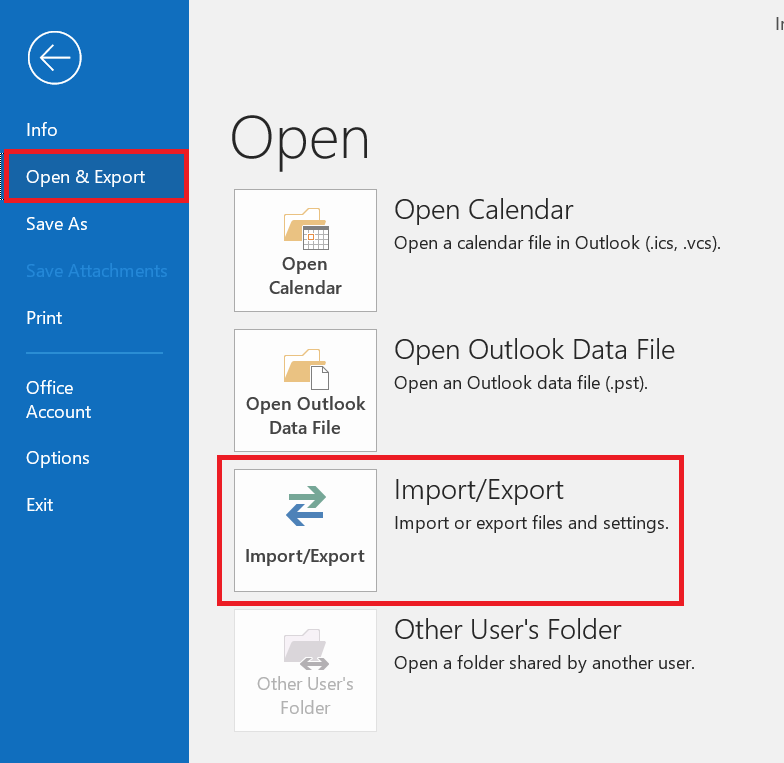
Open Outlook 365. Navigate to File>Open & Export>Import/Export.

Import/Export wizard to Backup Outlook 365

2. Select Export To a File Option

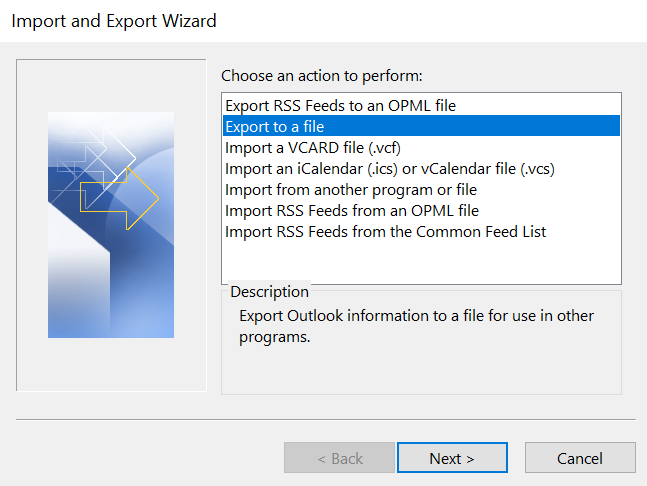
Select Export to a file from the Import & Export Wizard window and click Next.

Export to a file option using Import and Export Wizard

3. Choose to Export your Backup Data as a PST File

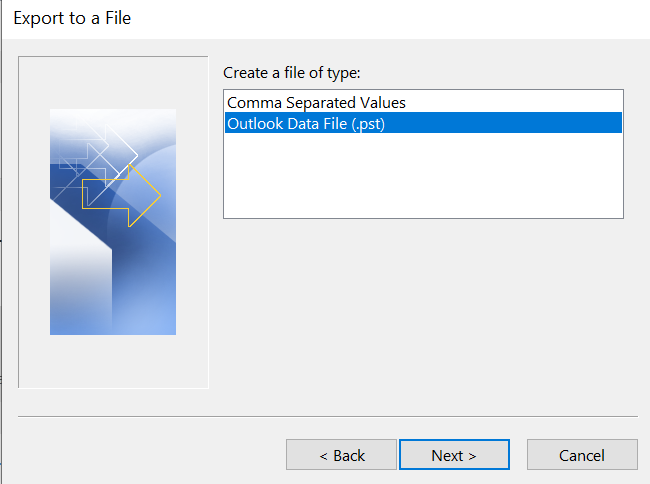
Select Outlook Data File (.pst) and click Next.

Export to a file option

4: Select Data that you wish to Backup

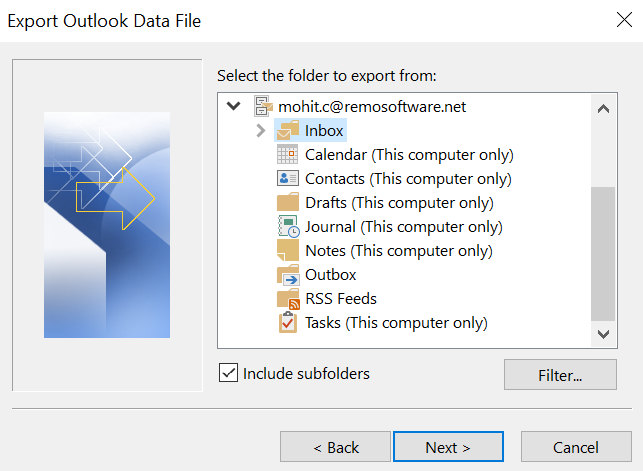
Select the folders you want to backup and click Next.

Export Outlook Data File include subfolders

5. Save the Backup File

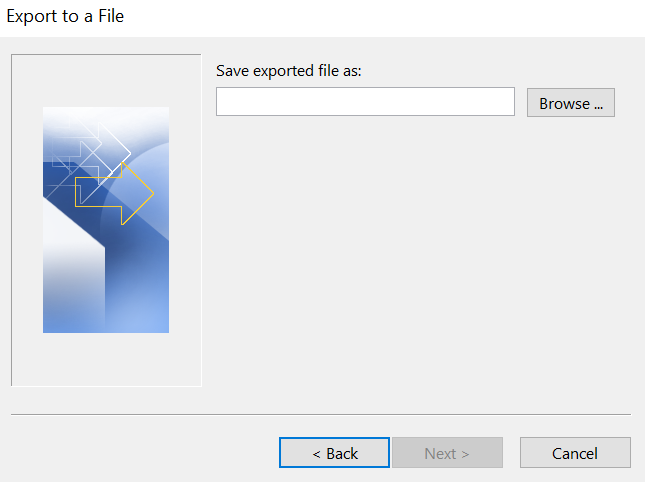
Choose a location to save your backup file and click Next.

Save Exported file as to Backup Outlook

You may now store your exported PST file as a reliable backup. It is recommended to avoid storing a backup file on your system’s main drive. Here are a few great storage locations for a backup drive.

  • Onedrive (cloud service)
  • External drive (local storage)

Backup Outlook365 Using A Local Drive

An offline backup is extremely secure. Especially if it’s on a drive that is separate from your main system. You could use a hard dive, an SSD or even a pendrive. After formatting your drive, simply copy your PST file onto it. Make sure to store the backup drive in a safe space. Do not forget to update your backup file every once in a while.

Backup Outlook365 Using Onedrive

One drive is a great way to automatically backup files and folder on your PC. We can use it to backup your Outlook PST file. To do so, follow the instructions below-

  • Open OneDrive settings. (select the OneDrive cloud icon in your notification area, and then select the OneDrive Help & Settings icon.)
  • Go to the Sync and backup tab.
  • Select Manage backup.
  • Select the folder (containing your PST file) If it is not backed up, and then select Save changes.

Backup Outlook365 Using Auto-Archive

While auto-does not directly backup your Outlook mails. It can help you sort out old emails and segregate them into folders. By following the steps below, you will be able to collect all your important mails in a single file.

Step 1: Open AutoArchive settings

  • Click the File tab in Outlook.
  • Select Options from the menu.
  • Click Advanced in the left-hand pane.
  • Under the AutoArchive section, click AutoArchive Settings.

Step 2: Configure AutoArchive settings

  • Check the box for Run AutoArchive and choose how often you want it to run (e.g., every 14 days).
  • Select Move old items to and specify the location for your archive file (a .pst file). You can click Browse to select a different folder.
  • You can also set how old items must be before they are archived by using the “Clean out items” option.
  • Click OK to save your settings.

The auto archive feature moves your old emails to a separate file called an archive .pst file. You can save emails from Outlook365 to any location by accessing File > Options > Advanced > AutoArchive. Set to move old items to local .pst on schedule.

Step 2: Import Outlook 365 Backup Using Import/Export Wizard

In an instance where you accidentally lose Outlook data. Do I need to back up Outlook 365 and restore it? Just follow the steps below-

1. Open the Outlook Import/Export Wizard

Open Outlook 365. GO to File>Open & Export>Import/Export.

Restore the Outlook 365 backup using the Import/Export Wizard

2. Import Backup Data From Another File

From the Import & Export Wizard, select Import from another program or file and click Next.
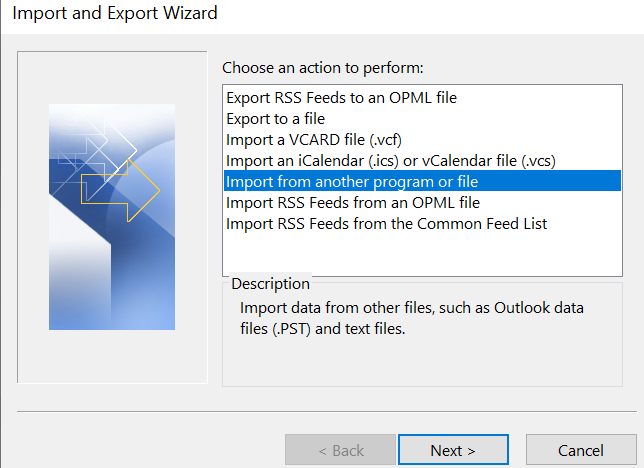
Restore the Outlook 365 backup using the Import option in Outlook 365

3. Select Your Backup File To Import

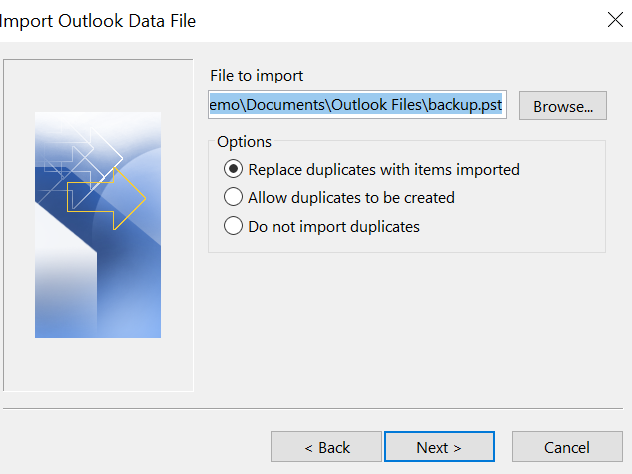
Using the Browse option, select your backup file, select the required option, and then click on Next.

Select and Import the backup Outlook PST file

4: Choose the Import items into the same folder option. Select the option with your email address to import your PST file into your Outlook mailbox. Click Finish to complete the process.

Limitation:

This feature is a one-time process; you must manually repeat it weekly or monthly to keep your data up-to-date. Also, it doesn’t save your important Outlook rules, account settings, or your custom configurations.

If you want to gain more control over your backup process, the Remo Outlook Backup and Migrate is the software for you.

Method 2: Backup Outlook 365 Data Using Professional Tool

If you are looking for a tool to back up your emails, contacts, events, rules, and even Outlook settings, Remo Outlook Backup and Migrate software is what you need. This tool encrypts your Outlook file and can be saved as a compressed archive to save storage space.

  • Automatically backs up Outlook along with all settings and attributes.
  • Allows you to compress and export Outlook to Outlook 365.
  • Backed-up archive files can be split according to the available space and can be stored at your desired location.
  • Offers a one-click backup solution to export Outlook PST files completely.

Need a tool to back up all your Outlook data?

Remo Outlook Backup and Migrate is a safe and simple tool to restore, backup and migrate your Outlook data without any limitations.

We shall divide this segment into two parts –

  • Create a Backup using Remo Outlook Backup and Migrate
  • Restore Outlook 365 data using Remo Outlook Backup and Migrate

Step 1: Backup Outlook 365 Data using Remo Outlook Backup and Migrate’s Backup Option

1. Open The Remo Outlook Backup and Migrate Tool

Download, install, and Launch Remo Outlook Backup and Migrate software. In the home screen, select the Backup option.

Use Remo Outlook Backup abd Migrate to Backup Outlook 365 data

2. Select a Backup Option

Select your backup type-
Smart Backup – Takes a regular backup of all your Outlook data.
Advanced Backup – Allows you to customize your Backup options according to your preferences.
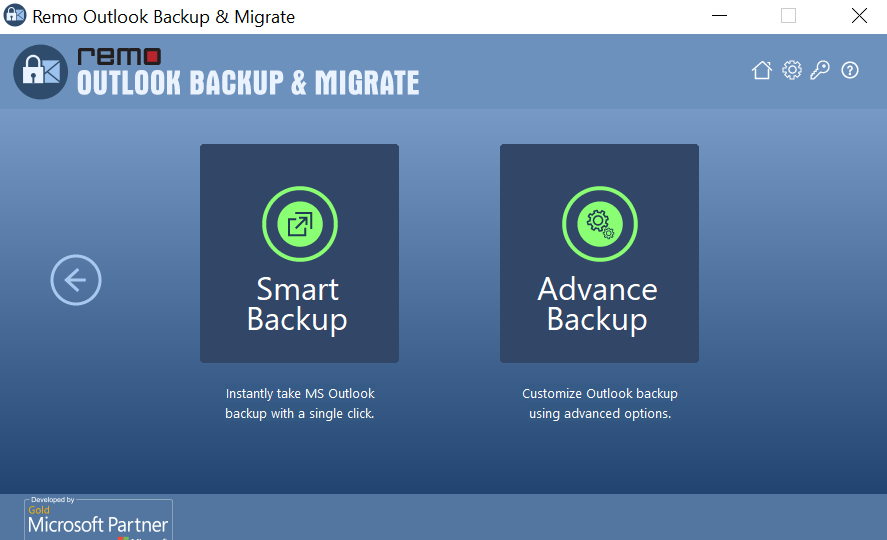
Choose between Smart and Advance backup to backup your Outlook 365 data

3. Select Outlook Items and Attributes to Backup

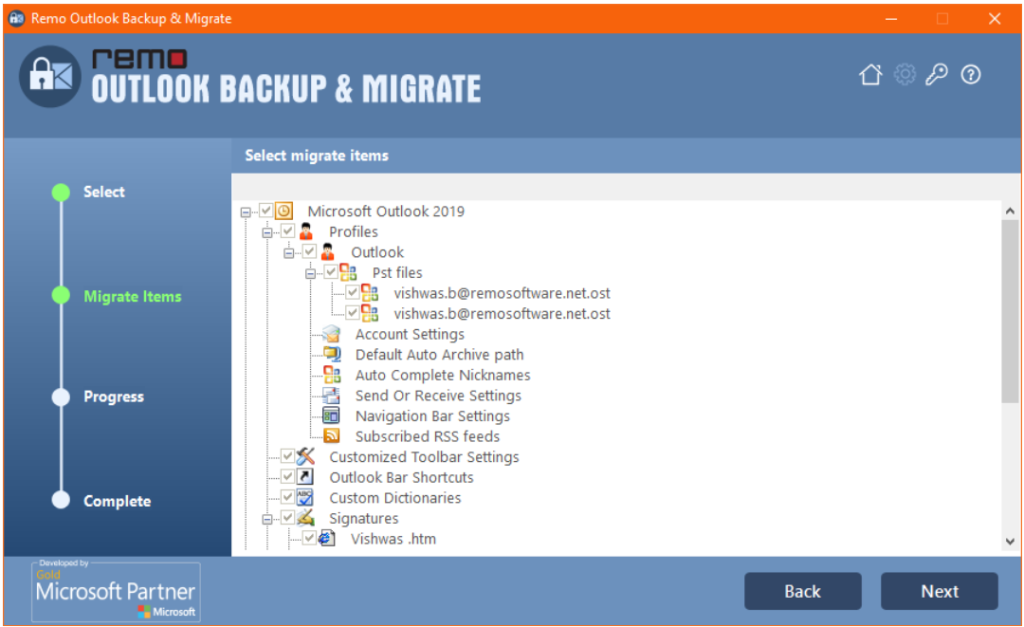
If you choose to take an Advanced Backup, select the Outlook items you wish to back up and click Next.

Select all the Outlook 365 items to backup

4. Save And Verify Backed Up Files

You can use the View Report option to view the backed-up files. Click on Finish.

Step 2: Restore Outlook 365 Backup using Remo Outlook Backup and Migrate’s Restore Option

When required, you can always restore all your Outlook data using the backup that you had created earlier by following the instructions below-

1. Restore Outlook Backup

Launch Remo Outlook Backup and Migrate software. In the home screen, select the Restore option.
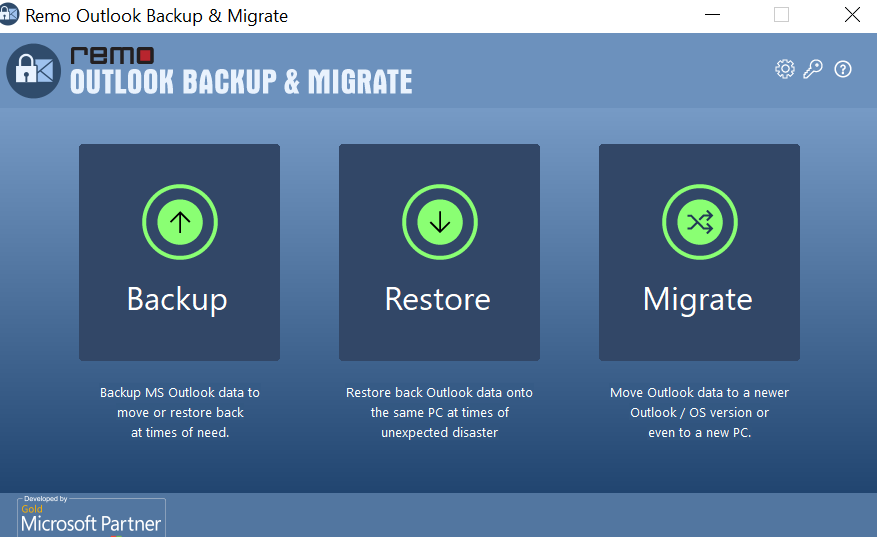
Restore the Outlook 365 backup using the Remo Outlook Backup and Migrate tool

2. Select Outlook Backup file

Select the Backup file from which you would like to restore and click on Next.
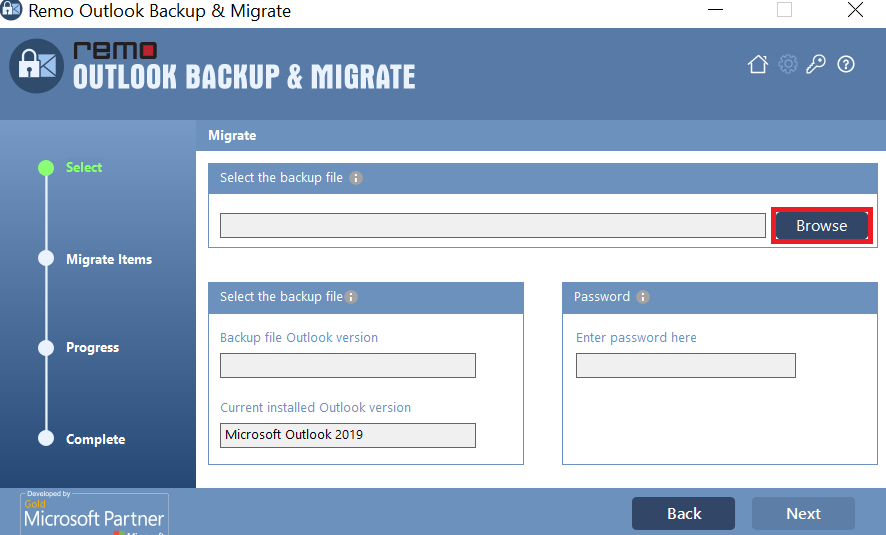
Browse the backup file to migrate to restore Outlook data/profile

3. Select Outlook Backup file

You can use the View Report option to view the restored files.

Storing Outlook Backup Files

After you have created an Outlook Backup File. You would need to store it, I suggest that you follow the 3-2-1 backup rule.

What is the 3-2-1 Backup Rule?

The 3-2-1 backup rule is a data data protection strategy that requires a user to store 3 copies of your data where 2 copies are stored on different types of media and 1 is stored on on a separate offline drive.

In the Case of an Outlook 365 backup file, you can store them in the following locations-

  1. Any dedicated location if your choosing
  2. A separate folder that is backed up by Onedrive.
  3. Any location on a separate offline drive. (NAS, USB drive, HDD, etc.)

By following this rule you avoid putting all your eggs in one basket and protect yourself from data loss if any one file gets damaged or lost.

How Often Should I Back Up My Outlook Data?

Losing emails or contacts can be a real headache, especially if Outlook 365 is your lifeline for work or personal tasks. To stay safe, back up your data regularly, weekly or monthly, depending on how often your mailbox changes.

If you send or receive critical emails daily, consider weekly backups using a .pst file export or an automated tool like Remo Outlook Backup and Migrate.

For less frequent users, monthly backups may suffice. Store backups on an external drive or secure cloud service to protect against crashes or accidental deletions. Regular backups ensure you’re never left scrambling to recover lost data.

Gravatar Tony Landry

About the Author: Tony Landry

Tony Landry is a Web Content Editor at Remo Software. He loves to write, edit, and manage content for users trying to troubleshoot and fix problems on Windows, Outlook, storage drives, and Cloud storage networks. With an aptitude that transcends writing, Tony is recognized as a Microsoft Outlook, Word, and PowerPoint expert. His comprehensive solutions…